Last Update: Wednesday December 31, 2025
If you are applying for a Vietnam e-visa and you have reached the part that asks for your intended accommodation address, you're not alone in wondering: “Wait, what if I haven’t booked a hotel yet?” And once your visa is approved, you might be surprised to find that there’s no address on the visa at all.
Don’t worry—this is a common point of confusion, and we are here to clear it up. Whether you’re a first-time visitor or a seasoned traveler, this guide will walk you through what to enter, why it matters, and what happens once you arrive in Vietnam.
This is simply the place you plan to stay when you first arrive in Vietnam. It could be a hotel, guesthouse, Airbnb, or even a friend’s home. The e-visa form asks for this to help immigration authorities understand your travel plans.
You don’t need to have a confirmed booking.
You’re not locked into staying at that exact address.
You just need to provide a realistic and reachable location.
If you are still deciding where to stay, we recommend entering the name and address of a reputable hotel in your arrival city. It’s perfectly fine to change your plans later.
Need help picking one? Our team can suggest trusted hotels that work well for visa applications.
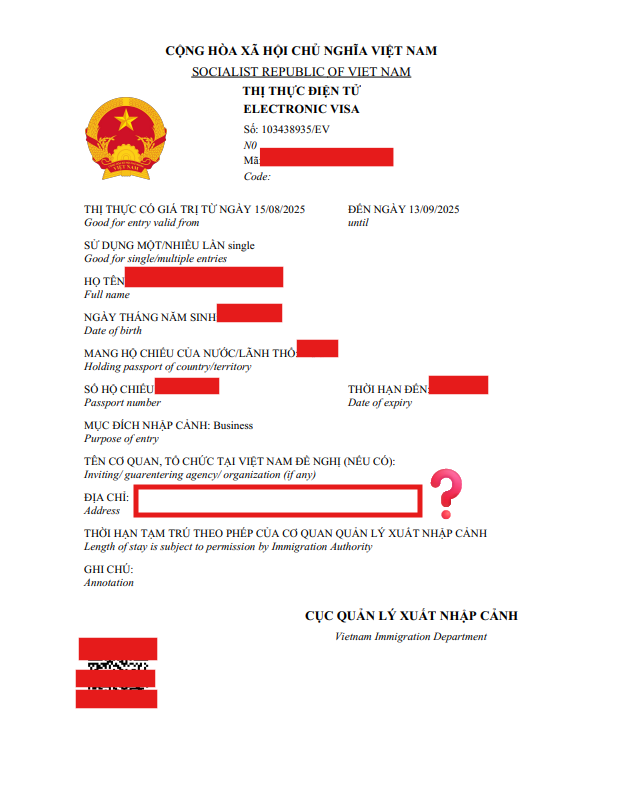
Once your e-visa is approved, you will probably notice that the accommodation address you entered is not printed anywhere on the visa. Please rest assured, that is not a mistake—it is just how the system works.
Here’s why:
The visa only shows key details like your name, passport number, travel dates, and port of entry.
The accommodation address is used behind the scenes during processing.
Immigration officers already have access to your full application, so there’s no need to display the address.
So if your visa looks “blank” in that section, do not worry—it’s completely normal and does not affect your entry into Vietnam.
Once you arrive, you might hear the term temporary address—especially if you’re staying longer or registering with local authorities.
It is the place you are currently staying in Vietnam, even if just for a few nights.
Hotels usually handle this for you automatically.
If you’re staying in a private home or rental, you might need to report your address to the local ward police.
This becomes more important if you are applying for a visa extension or other services that require proof of where you’re staying.
Pick a real hotel or guesthouse for your intended accommodation address—even if it’s just a placeholder.
Avoid vague entries like “TBD” or “Not sure”—they can slow down your application.
Do not stress if your visa does not show the address—it’s not supposed to.
Keep your hotel booking confirmation handy when you land, just in case immigration asks.
Need assistance? We are here for you anytime:
Start your application through our Vietnam-Immi.org, and let us take care of the details—so you can focus on planning your adventure.




 84.379.522.522


