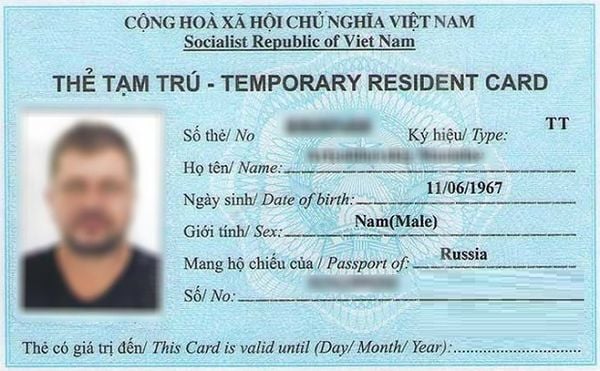
Photo: Collected
Last Updated: Monday March 09, 2026
Foreigners who intend to live, work, or study in Vietnam for more than a few months often discover that constantly renewing short-term visas is inconvenient and costly. A Temporary Residence Card (TRC) offers a practical solution, allowing long-term residence while serving as a valid form of identification. With a TRC, you can enter and exit Vietnam multiple times without reapplying for a visa, making life considerably easier for professionals, investors, and families alike.
This guide provides a detailed, step-by-step explanation of how to apply for a TRC in Vietnam, covering eligibility, paperwork, application procedures, and tips to avoid delays.
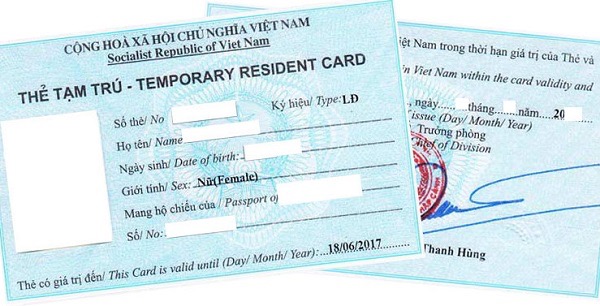
Photo: Collected
A Temporary Residence Card is an official document issued by the Vietnamese Immigration Department under the Ministry of Public Security. It functions much like a long-term visa and is typically valid for one to five years, depending on your circumstances and the validity of your passport. Once granted, the TRC allows multiple entries and exits, essentially replacing the need for repetitive visa runs.
Not every foreign visitor qualifies. The card is designed for foreigners who have legitimate, long-term reasons to stay. Common qualifying categories include:
Work permit holders employed by a Vietnamese organization or company.
Investors and business owners who possess a recognized investment certificate or enterprise registration.
Dependents, such as spouses or children of Vietnamese citizens or of foreigners who already hold a TRC.
Students or researchers enrolled in accredited long-term education programs.
It’s important to note that tourist visa holders generally do not qualify, and those working informally without proper permits will not be granted a TRC.
Details of the Application Dossier for a Temporary Residence Card (TRC) for Foreigners Include the Following Documents:
Temporary residence declaration form for foreigners – Form NA17.
Request for confirmation of temporary residence from the local police.
Application form for the issuance of a Temporary Residence Card for foreigners – Form NA8.
Foreigner’s passport.
Two 3 × 4 cm passport-sized photos of the foreigner applying for the TRC.
Documents from the Individual/Organization Sponsoring the Foreigner:
For organizations: Request for TRC issuance – Form NA6.
For individuals: Sponsorship request for TRC issuance – Form NA7.
Certified Copies:
Citizen ID/passport of the Vietnamese sponsor.
Business registration certificate or establishment decision of the sponsoring organization.
Depending on the specific case of the foreigner applying for the TRC, additional documents may be required. Examples include:
For TRC applications based on marriage to a Vietnamese citizen:
Marriage certificate registered in Vietnam or other equivalent legal document.
Visa of the foreigner applying for the TRC in Vietnam.
For TRC applications based on employment in Vietnam:
TRC application form for foreign workers – Form NA8.
TRC sponsorship application form – Form NA6.
Two passport photos sized 2×3 cm of the foreigner applying for the TRC.
Request for confirmation of temporary residence from the local police.
Entry visa and passport of the foreigner.
Proof of family relationship (if entering with spouse or children).
Seal and signature registration form of the legal representative of the company (where the foreigner is employed), submitted to the Immigration Department – Form NA16.
Work permit or equivalent valid document (notarized copy).
Business registration certificate of the company where the foreigner works in Vietnam (notarized copy).
Letter of authorization/introduction (if the applicant is not the legal representative of the company where the foreigner works).
Once all documents are prepared, the next step is to officially lodge the application.
Applications must be submitted to the Vietnam Immigration Department, which operates under the Ministry of Public Security. Major offices are located in:
Hanoi: 44-46 Tran Phu Street, Ba Dinh District
Ho Chi Minh City: 333-337 Nguyen Trai Street, District 1
Da Nang: 7 Tran Quy Cap Street, Hai Chau District
While these are the primary offices, some provinces also have branches, so you should confirm the correct location with your sponsor.
Document review: Double-check that each page is signed, dated, and stamped where necessary.
In-person submission: Either you or your sponsoring organization must submit the full dossier to the Immigration Department. Walk-ins are generally accepted during working hours, though arriving early is recommended.
Pay the processing fee: The fee varies by the card’s validity—typically ranging from about USD 80 for a one-year card to around USD 165 for a three-year card (figures can change, so confirm current rates). A receipt will be issued, which you must keep to collect your card later.
Standard processing takes five to seven working days. However, peak periods or incomplete paperwork can lengthen the wait. If the Immigration Department requires additional documents, they will inform the sponsor, so ensure your contact details are accurate.
When your TRC is approved, you or your sponsor will receive notification to collect it. Bring the following:
Your passport.
The original payment receipt.
The TRC is a laminated card similar in size to a driver’s license and contains your photo, personal details, and validity dates.
The TRC’s validity typically ranges from one to five years, but it will never exceed the expiration date of your passport or work permit. To maintain continuous residence, apply for renewal at least 30 days before the card expires.
Holding a TRC allows you to:
Enter and exit Vietnam freely without a visa during its validity.
Use it as official identification for certain administrative tasks, like opening a bank account.
However, you are also responsible for:
Reporting any change of address within 24 hours to local police.
Complying with Vietnamese laws and labor regulations.
Ensuring your sponsor remains valid (for example, you cannot continue using a TRC tied to an employer if you leave that company).
Rules can vary slightly between provinces or even individual immigration offices. Before submission, confirm the latest requirements on the official immigration website or by calling the local office.
Language barriers or complex paperwork can make the process stressful. Many applicants choose to hire a licensed visa or relocation service to handle translations, notarizations, and submissions. While it adds cost, it often reduces the risk of errors and saves time.
Photocopy or scan everything you submit, including your sponsor’s documents. Having a complete set of records can be invaluable if questions arise later or if you need to renew the card.
Vietnam has several national holidays when government offices close. Check the calendar so your application isn’t delayed by an unexpected break.
Despite best efforts, some applications are refused. Knowing the common pitfalls helps you avoid them:
Missing signatures, outdated forms, or inconsistent details between your passport and sponsor documents can lead to outright rejection or a request for resubmission.
If your passport has fewer than 13 months remaining, immigration officers might shorten the TRC’s validity or refuse the application entirely.
The sponsoring company or individual must provide legitimate, verifiable documentation. Applications are denied if the sponsor’s business license has expired or if the relationship to the applicant cannot be clearly proven.
If you are applying as a spouse or child of a TRC holder or a Vietnamese citizen, you will need:
A marriage certificate or birth certificate, translated into Vietnamese and notarized.
Proof of your family member’s legal residence and valid TRC or Vietnamese citizenship papers.
Family-based TRCs often have the same validity as the principal applicant’s card, so renewals should be coordinated.
Applying for a Temporary Residence Card in Vietnam is not complicated if you understand the requirements and plan ahead. Begin by confirming your eligibility, prepare all necessary documents—including those from your sponsor—then submit the application to the appropriate immigration office. After a short processing period, you will receive a card that provides freedom of movement, legal security, and a simpler life in Vietnam.
By carefully following these steps, double-checking every document, and staying informed about current regulations, you can secure a TRC that supports your long-term plans—whether for work, investment, or family—while enjoying the vibrant culture and opportunities Vietnam has to offer.




 84.379.522.522


