Photo: Collected
Last Update: Sunday February 01, 2026
Many foreigners who apply for Vietnam's new e-visa are surprised—and sometimes worried—when their approved e-visa comes without a port of entry. This is one of the most common questions today because before 2023, Vietnam’s e-visa used to display the exact entry point you selected in the application. With the new system, this detail no longer appears on the document, creating confusion at first glance.
The Port of Entry Is No Longer Shown on Vietnam’s E-Visa
The good news: This is perfectly normal. Vietnam simplified the e-visa layout by removing the port-of-entry field for all applicants. Even though the port is no longer shown on the passport, the visa remains valid and acknowledged at immigration. This article will address concerns about why some Vietnam e-visas do not have entry gates and what foreigners need to know to ensure smooth entry. From there, you can easily enter Vietnam as long as your personal information and validity dates are correct.
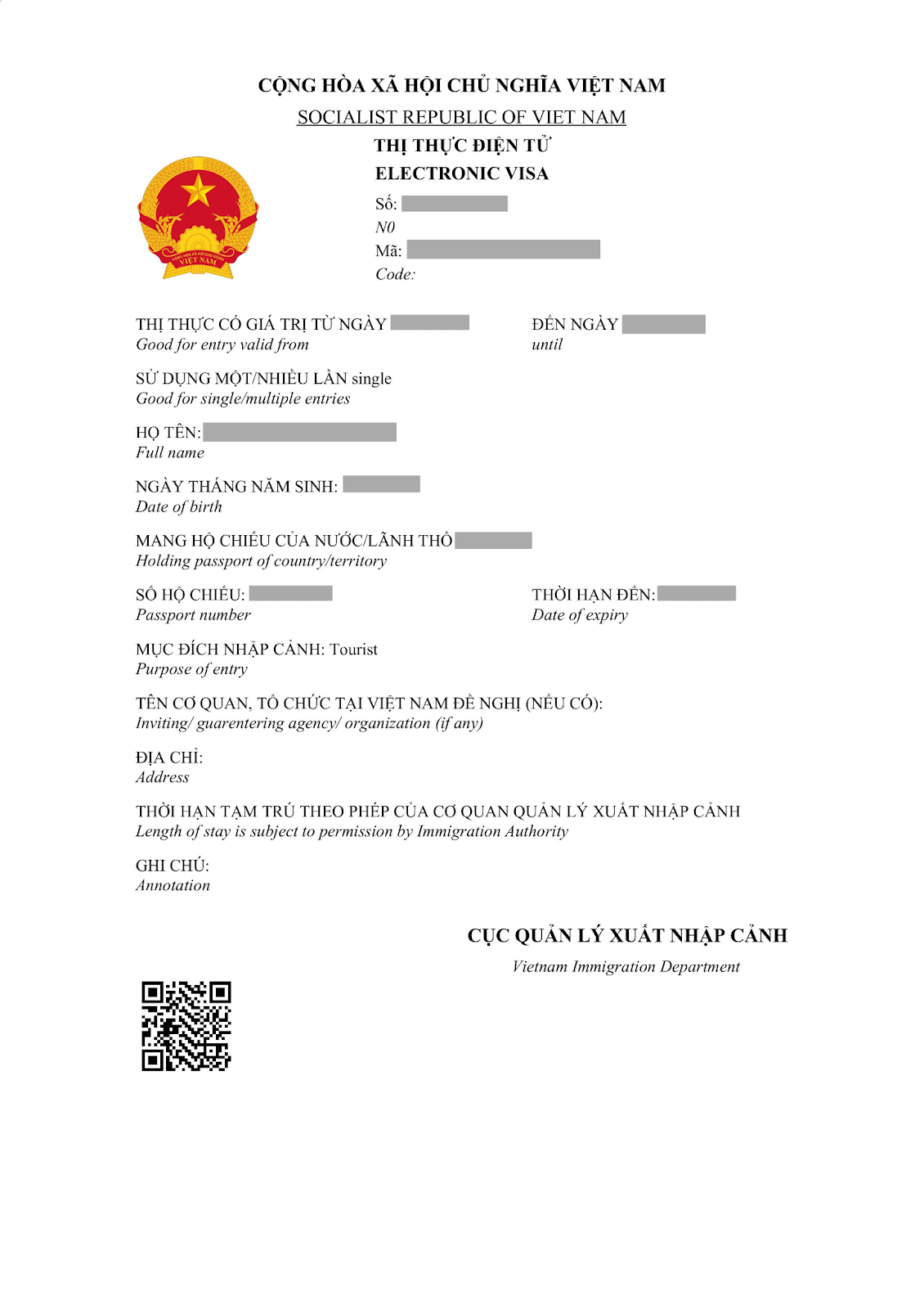
Vietnam E-Visa 2025 format—missing port of entry is normal.
Under the updated rules, the new e-visa document won't specify the entry point, but you can use it for entry and exit at eligible entry/exit ports (specifically seaports, airports, and landports). This means that even if you originally selected “Noi Bai Airport,” but your plans change and you land in Ho Chi Minh City instead, you are still allowed to enter—provided that you use one of Vietnam’s official international entry points.
Vietnam currently allows e-visa entry through multiple channels, including airports such as Noi Bai (Hanoi), Tan Son Nhat (Ho Chi Minh City), Da Nang, Cam Ranh, and Phu Quoc; major land borders such as Moc Bai, Huu Nghi, Lao Cai; and seaports including Hai Phong, Da Nang, and Nha Trang. As long as the port you choose belongs to the official list, the missing port information on your e-visa will not cause any delay or refusal.
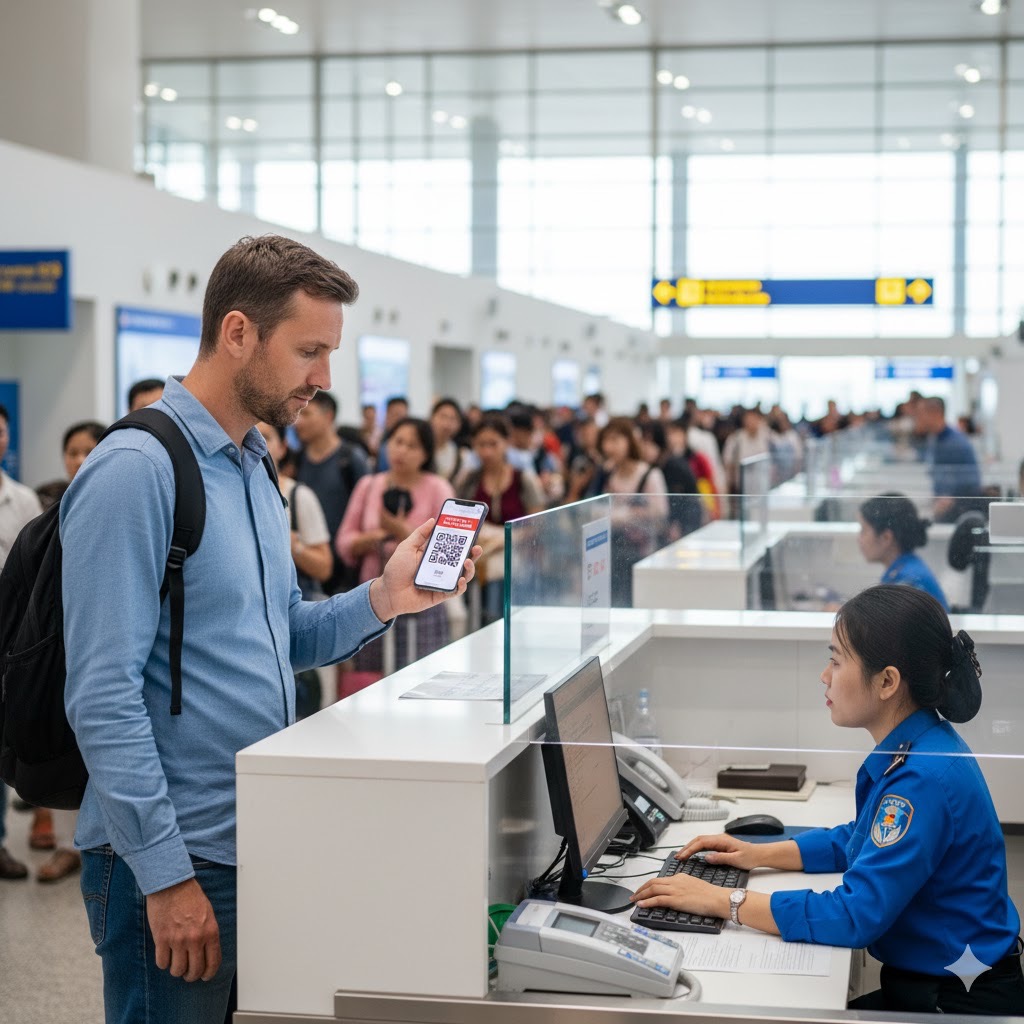
If you receive your e-visa and notice that the port of entry is missing, don’t worry. This is normal under the new system. Just make sure the important details on your visa—such as your full name, date of birth, passport number, and visa validity dates—match exactly with your passport. If they do, your visa is valid. Next, double-check that the port you plan to use is on Vietnam’s list of eligible entry points. For extra peace of mind, it’s a good idea to print at least one physical copy, as many immigration counters still prefer hard copies for faster processing.
In most cases, foreigners can proceed without any issues. However, there are situations where reapplying is necessary. For example, if your passport number is incorrect, if the wrong validity dates were issued, or if you mistakenly selected a port that is not an international entry point at all, then a new application is required since Vietnam does not modify e-visas once issued. If you're uncertain about the details, or if your travel itinerary has changed significantly, asking a visa support service to review your document can save time and prevent last-minute problems.
For foreigners seeking professional assistance, you can apply for or verify your e-visa through a trusted service on our website—with over 15 years of experience handling visas, we help you travel to Vietnam without worrying about any visa issues.




 84.379.522.522


